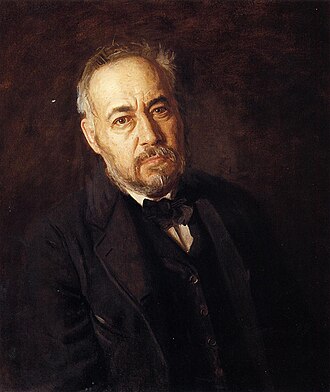
Thomas Eakins was the greatest American realist painter of the 19th century, celebrated for his unflinching, scientifically grounded depictions of human anatomy, sport, and surgery. Trained in Paris and deeply influenced by Velázquez and Rembrandt, he brought an almost clinical precision to American subject matter. The Gross Clinic (1875), showing a surgeon operating before medical students, was so shockingly realistic — blood on the surgeon's hands, a patient's exposed flesh — that it was rejected from the Philadelphia Centennial Exhibition and shown in the medical building instead. He was forced to resign from his teaching post at the Pennsylvania Academy when he removed a loincloth from a male model in a mixed-gender class.